
01 PLANES & LEVELS
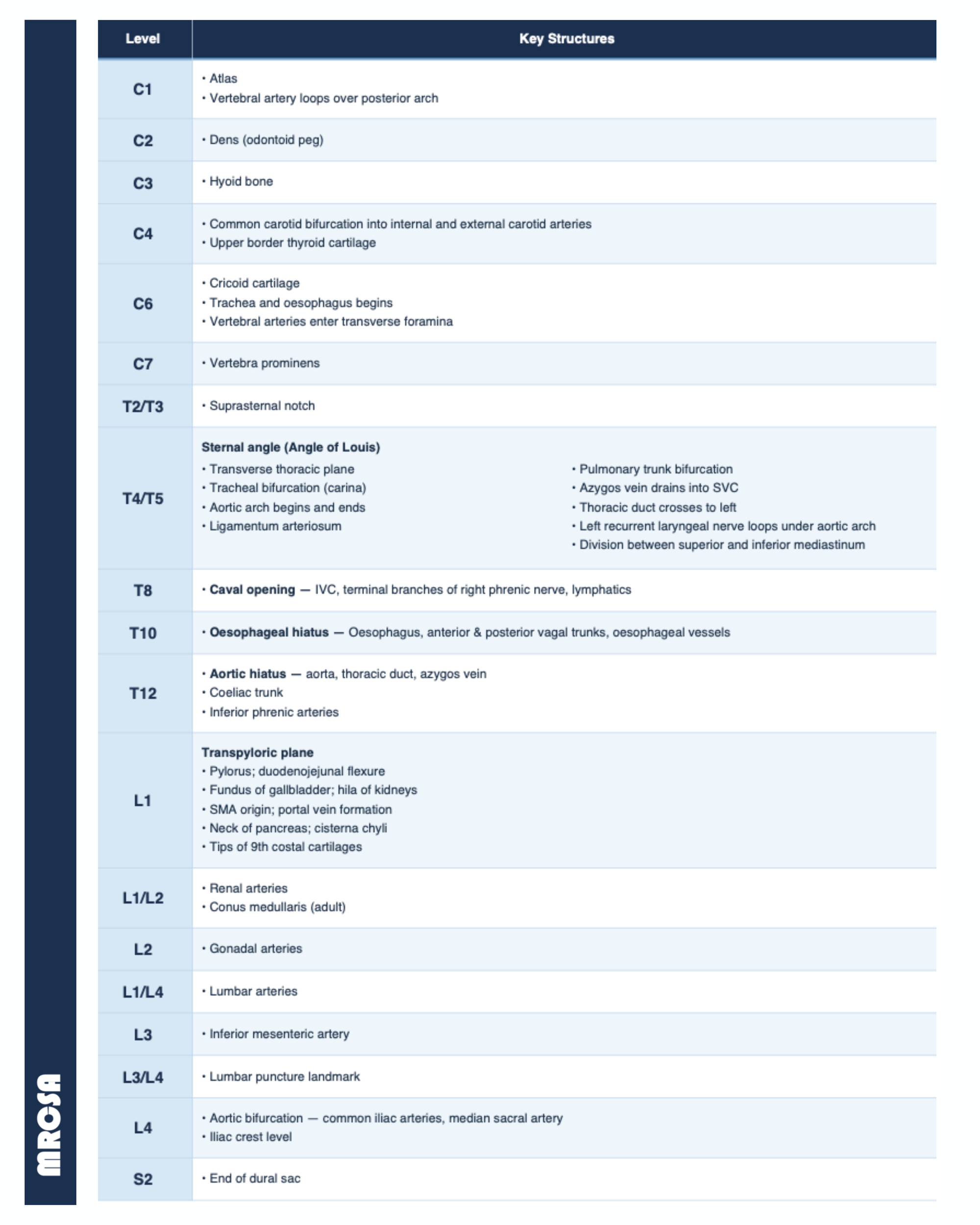
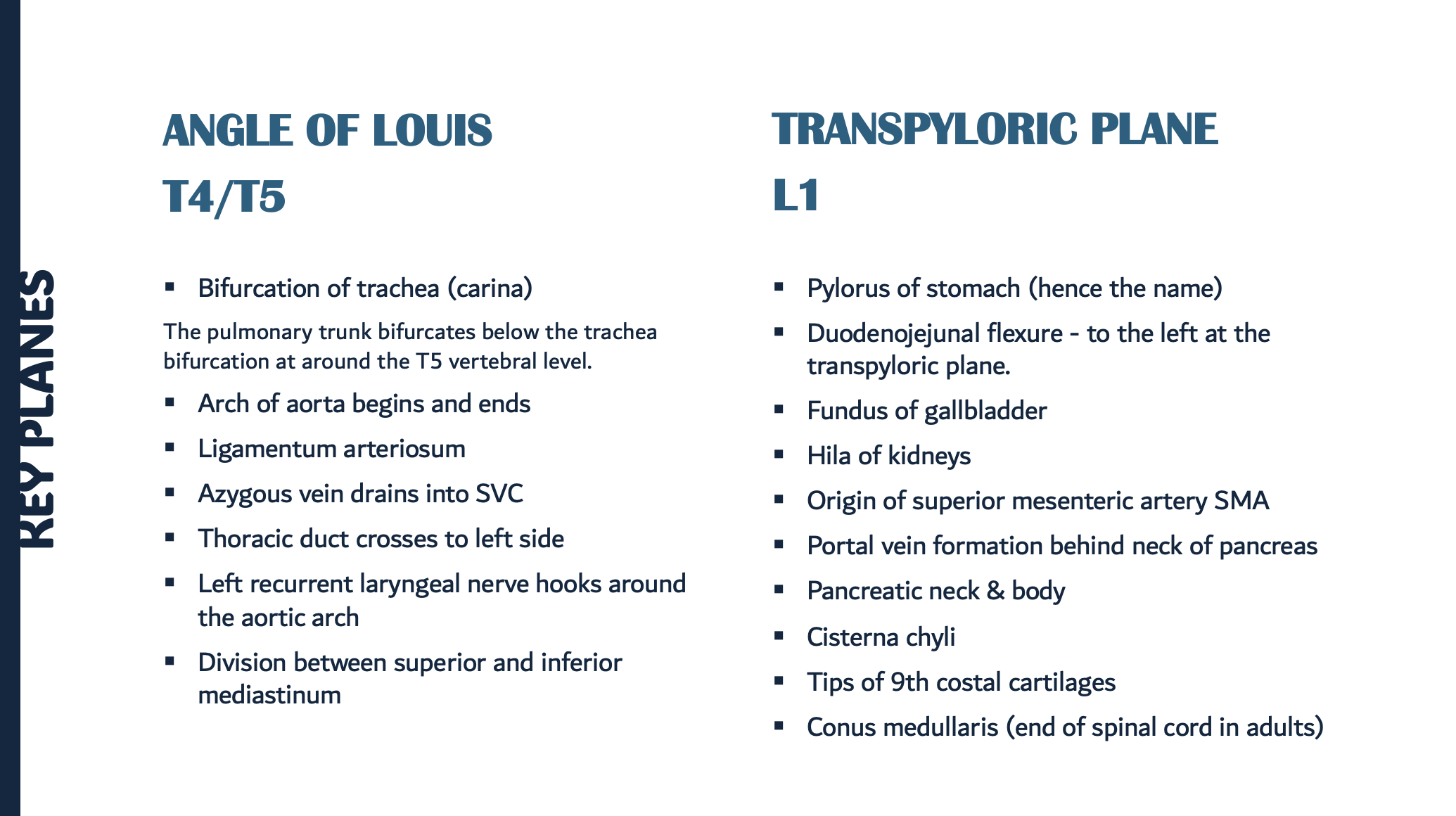
👩⚕️ I have compiled for you all the key landmarks and their levels that you need to learn. Download the PDF and give yourself 5 minutes to memorise! It is super high-yield for both Part A and Part B.
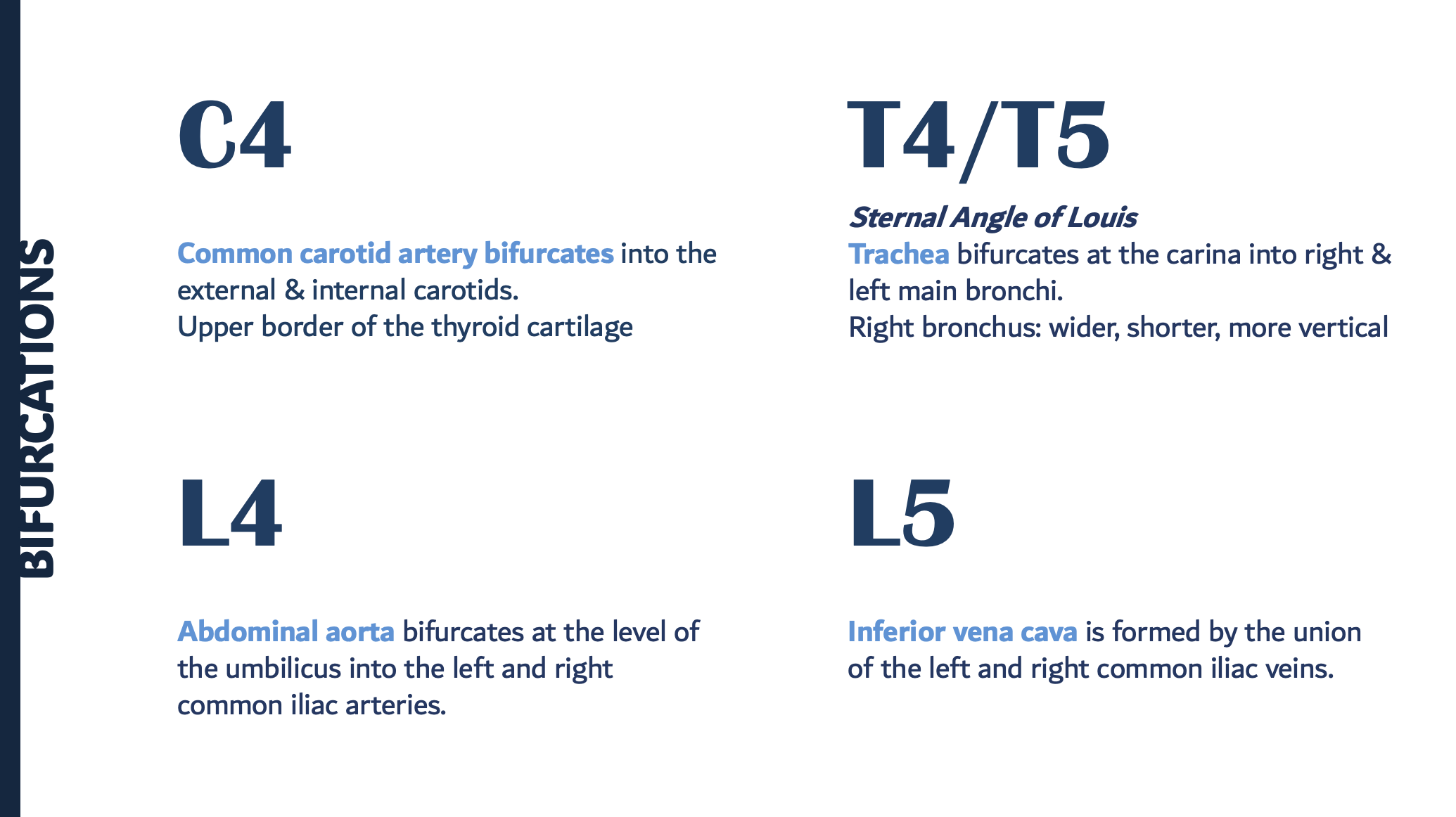
BiFOURcations at C4, T4/5 and L4
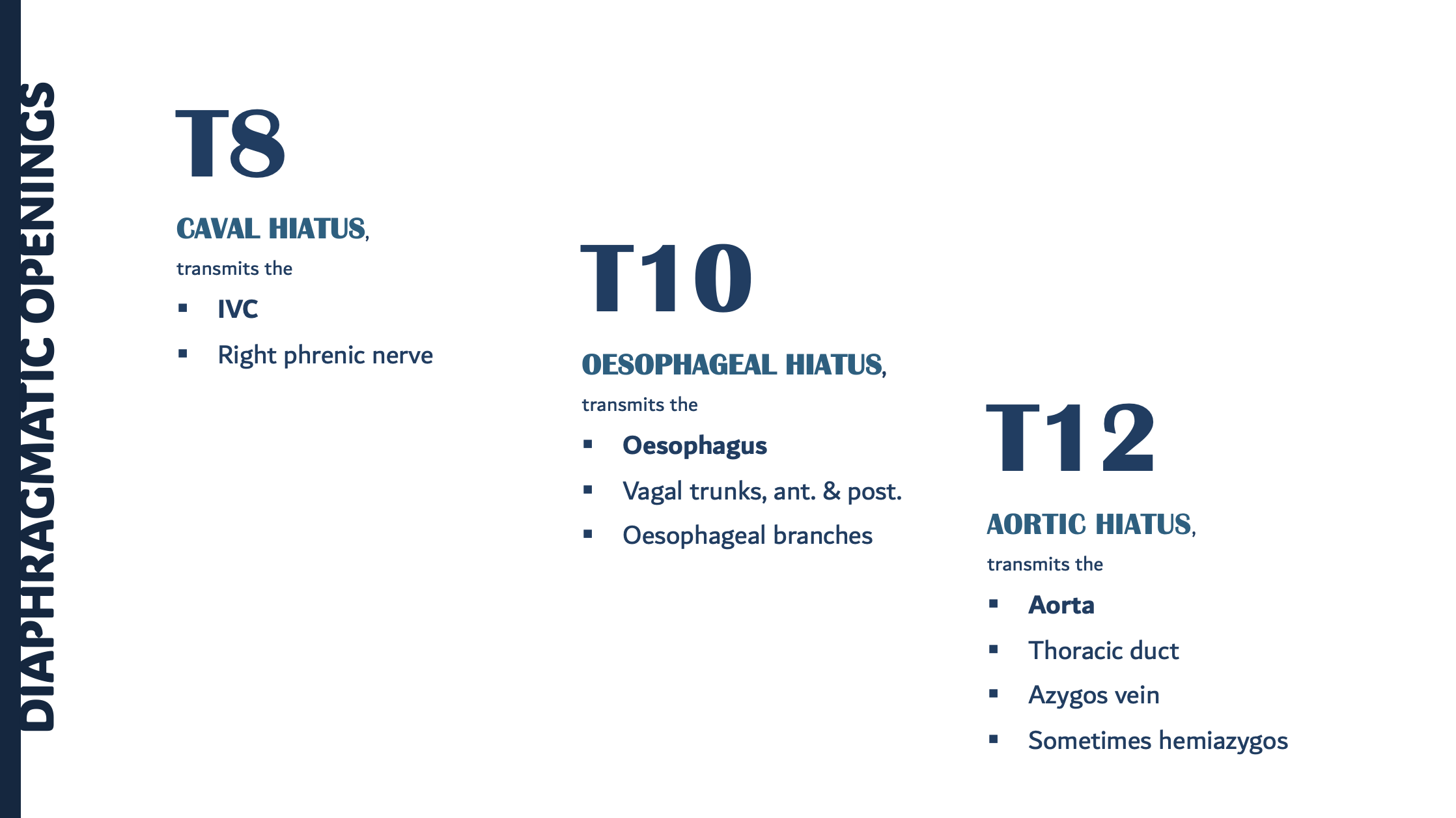
Vena cava (T8) has 8 letters, Oesophagus (T10) has 10 letters, Aortic hiatus (T12) has 12 letters

Which of the following structures passes through the diaphragmatic opening at T12?
- ((Vagus nerve and oesophagus::Enter at T10))
- ((IVC and phrenic nerve::Enter at T8))
- ((Ureter and gonadal vessels::Don't pass through a diaphragmatic opening))
- ((Azygos vein and thoracic duct::☑️ The aorta, thoracic duct, azygos vein and sometimes hemiazygos pass through the diaphragmatic opening at T12))
The inferior vena cava passes through the diaphragm at which vertebral level?
- ((T8::☑️ Caval opening; inferior vena cava passes through the diaphragm at T8))
- ((T9::No major diaphragmatic aperture))
- ((T10::Oesophageal hiatus — oesophagus and vagal trunks))
- ((T11::No major diaphragmatic aperture))
Which of these do not occur at the transpyloric plane?
- ((Fundus of the gallbladder::The gallbladder fundus lies at the transpyloric plane, typically at the tip of the 9th costal cartilage in the mid-clavicular line))
- ((Neck of the pancreas::The neck of the pancreas sits directly on the transpyloric plane at L1))
- ((Hilum of the kidneys::Both renal hila lie at the transpyloric plane: the left at L1, the right slightly lower but still within the plane.))
- ((None of the above::☑️ Correct, all of the listed structures are located at the transpyloric plane))
At which level is the neck of the pancreas?
- ((T12::Level of the aortic hiatus))
- ((L1::☑️ The neck of the pancreas lies on the transpyloric plane at L1))
- ((L2::Below the level of the neck of the pancreas))
- ((L3::Too low — near the inferior border of the pancreas))
A child inhales a peanut. Where is it most likely to lodge?
- ((Left lower lobe bronchus::The left main bronchus is narrower and more horizontal))
- ((Left upper lobe bronchus::Less common site))
- ((Right lower lobe bronchus::☑️ The right main bronchus is wider, shorter, and more vertical, so foreign bodies most commonly pass into the right lower lobe bronchus))
- ((Right upper lobe bronchus::Less common than lower lobe))
💡 The right main bronchus is wider, shorter, and more vertical than the left, so foreign bodies preferentially enter it, especially into the lower lobe bronchus.
Where is the duodenojejunal flexure located under normal anatomical conditions?
- ((Right of the midline at L2::Right-sided DJ flexure suggests malrotation))
- ((Left of the midline at the transpyloric plane, L1::☑️ Normal position — to the left of the spine at the level of the transpyloric plane))
- ((Midline at L3::Incorrect vertebral level))
- ((Right upper quadrant below the liver::Abnormal position))
💡 Malposition of the DJ flexure to the right is a sign of malrotation!
A structure located at the level of the T5 vertebra is:
- Left atrium
- Tracheal bifurcation
- ((Bifurcation of pulmonary trunk::☑️ See how the pulmonary trunk bifurcates at T5, inferior to the tracheal bifurcation at T4/T5))
- Bifurcation of right bronchus